Krieg, Tod, Leid, Zerstörung und viele Menschen die sich gezwungen sehen ihr zu Hause zu verlassen – auch in diesem Jahr wieder. Ich kann nicht verstehen, wie man Bilder von zum Beispiel dem Hubble oder James Webb Teleskop ansehen kann, ohne zu erkennen, dass es nur einen Fokus für uns auf der Erde geben kann:
Unser gemeinsames Überleben und friedliche Zusammenleben auf diesem Planeten.
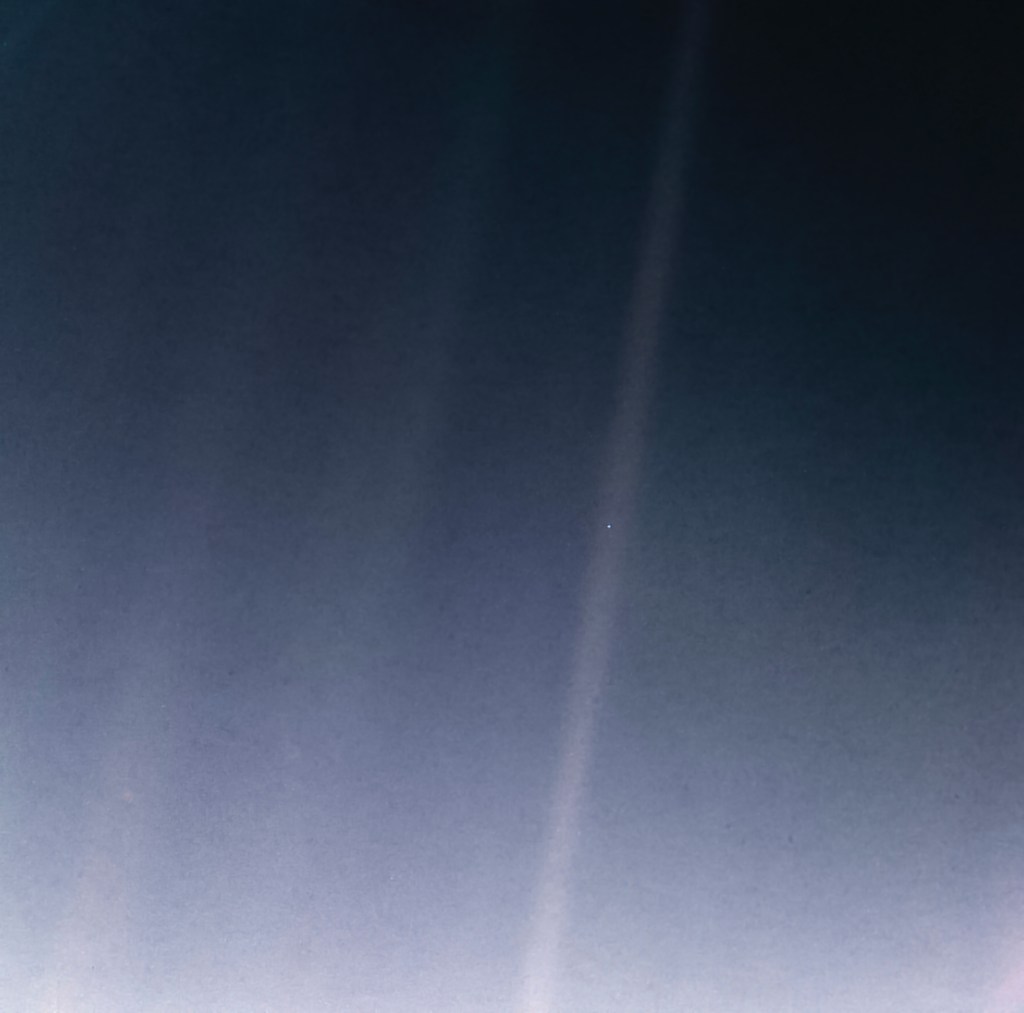
Für mich hat es niemand besser zusammengefasst als Carl Sagan mit seiner Beschreibung des Pale Blue Dot. Einer Aufnahme der Voyager 1 Raumsonde vom 14. Februar 1990, welche auf Sagans Vorschlag, sich auf ihrem Weg raus aus unserem Sonnensystem ein letztes Mal „umschaute“, um dieses Foto von unserem Planten – der Erde – zu machen.
„Es ist uns gelungen, dieses Bild [aus dem tiefen Weltraum] aufzunehmen, und wenn man es betrachtet, sieht man einen Punkt. Dieser Punkt ist hier. Er ist unser Zuhause. Wir sind das. Darauf hat jeder, von dem ihr je gehört habt, jeder Mensch, der je gelebt hat, sein Leben gelebt. Die Summe aller unserer Freuden und Leiden, Tausende von selbstbewussten Religionen, Ideologien und Wirtschaftsformen, alle Jäger und Sammler, alle Helden und Feiglinge, alle Schöpfer und Zerstörer von Zivilisationen, alle Könige und Bauern, alle verliebten jungen Paare, alle hoffnungsvollen Kinder, alle Mütter, alle Väter, alle Erfinder und Entdecker, alle Morallehrer, alle korrupten Politiker, alle Superstars, alle obersten Führer, alle Heiligen und Sünder in der Geschichte der Menschheit lebten dort auf diesem Staubkörnchen, das im Sonnenlicht tanzt.
Die Erde ist eine sehr kleine Bühne im riesigen Theater des Kosmos. Man denke nur an die Ströme von Blut, die von Generälen und Feldherren vergossen werden, um für Ruhm und Triumph einen Augenblick lang der Herrscher über einen Bruchteil eines Punktes zu werden. Man denke an die endlosen Grausamkeiten, die die Bewohner eines Winkels auf diesem Punkt an kaum anders gearteten Bewohnern eines anderen Winkel des Punktes zufügen. Wie wenig sie sich verstehen, wie gern sie sich gegenseitig umbringen, wie glühend ihr Hass ist. Unsere Anmaßung, unsere eingebildete Wichtigkeit, die wahnwitzige Vorstellung, dass wir im Universum einen besonderen Platz einnehmen, wird von diesem schwachen Lichtpunkt in Frage gestellt.
Unser Planet ist ein einsames Körnchen im großen Dunkel des Weltalls. In unserer Dunkelheit – in all dieser Weite – gibt es keinen Hinweis, dass von draußen jemand kommt, um uns vor uns selbst zu schützen. Es liegt an uns. Es wurde gesagt, dass Astronomie eine bescheiden machende, und ich möchte hinzufügen, eine charakterbildende Beschäftigung ist. Vielleicht gibt es keinen besseren Beweis für die Aberwitzigkeit menschlicher Vorstellungen als dieses aus großer Entfernung aufgenommene Bild von unserer winzigen Erde. Für mich unterstreicht es unsere Verantwortung, dass wir freundlicher und mitfühlender miteinander umgehen und diesen kleinen blauen Punkt, das einzige Zuhause, das wir je gekannt haben, bewahren und wertschätzen.“
Carl Sagan 1994 (Übersetzung aus Wikipedia)
Original Pale Blue Dot




 tomzigan.de