Personal Kanban

How “Personal Kanban” helped us to keep it all on track

My girlfriend and me had different ways of prioritizing, organizing and doing the task that were important to us. This led from time to time to some frustration, even more as we decided to live together. Things culminated, as we decided to quit our jobs and travel the world for a year. More and more things popped up, that were important and had to be taken care of. Not only the actual planning of our travel, but as well things like insurances, rental contract, health check-ups, vaccinations, storage for the things we wanted to keep, etc., etc.. It seemed as if we got buried in tasks – we still worked full time at this moment. Me – Tom – I worked until the 23rd of December. On the 1st of January our flight to Argentina would take off.

Although my girlfriend didn’t liked the idea of me bringing my work home, she asked me, if we should not try one of these agile things I so often talked about.

We hang a board in our kitchen and started with three columns: “To Do”, “Doing”, “Done”. Than we wrote a sticky note for each task. The chunks should be as small as possible – at least doable in a day, but still big enough to make sense. We hang them into the “To Do” column. Afterwards we tried to prioritize the tasks and organized them accordingly. Each of us could draw now three tasks that we wanted to be responsible for, wrote our name on them and hang them into the doing column. Why three? We thought that this would be the amount of work to handle best. One important idea is to stop starting task, but instead start finishing tasks.

We decided to meet every second day in front of the board and have a “stand up. In this stand up we talked about our progress moving our stickies, what new tasks came up and reprioritized. At the end of every week, we had a short retrospective to find out how things were going in respect to our new process and if we wanted to change something.

At the end of December one of the last things we packed was our board. It had done the trick for us. We had not only accomplished to organize everything that was needed for our great adventure. More importantly we managed to find a great way of working together on bigger challenges.

After we came back from our big trip – in case you’re interested you can have a look on our travel site backpacker-tips.com – we didn’t immediately install a board – but it didn’t took too long after we found us new jobs and a new home that the next big project arrived. We expected a child. 🙂

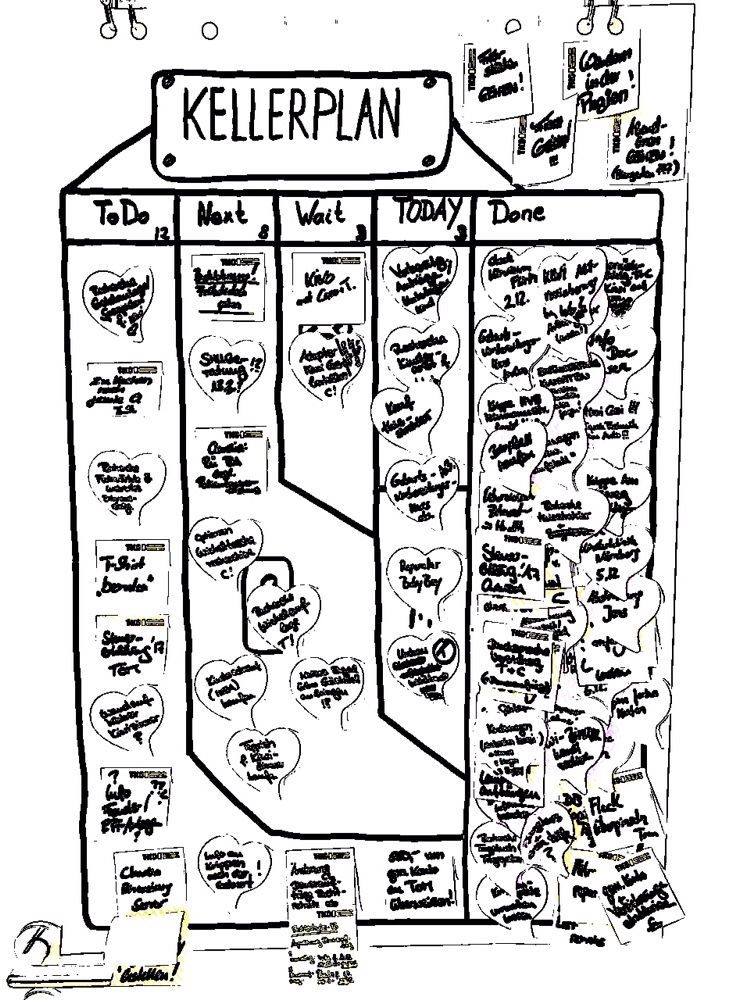
Again a flood of tasks came up. So again we hang up a board – this time in our living room. From what we learned working with the board the last time we added a “Next” and a “Wait” column. We visualized in the “Doing” column who was responsible for the task by simply dividing the column. All columns – except “Done” of course got wip-limits (Work in Progress Limits). As well, we visualized the chronological order of some tasks. Tasks that had to be done now or the next two weeks got on our main board. The others accordingly on a sub board beneath the main board, which had lanes for bigger time frames like until December or until April. All task for a new team member got a sticky in the shape of a heart to visualize our highest priority status.

Evenly important we decided that if we worked hard, we should as well take care of us. We still can choose between four treats, if our done column is filled with done tasks. It’s important to celebrate your achievements once in a while! One of my favourite sticky notes on our board: “Go out and have a nice breakfast!” 🙂

Interested? Want to find out more? I recommend this book to you:

Personal Kanban on Goodreads

A picture of the two boards in our living room. Meanwhile were happy to be a family and the second board was no longer needed.

Play4Agile 2018 – personal highlights

It is always very nice to be in a group of people that are open minded to try something new, interested in sharing their knowledge, and welcoming so that you feel at home no matter where you come from – geographically, technically, skilled wise, or whatever.

Simply have the Play4Agile spirit of #dare #share #care

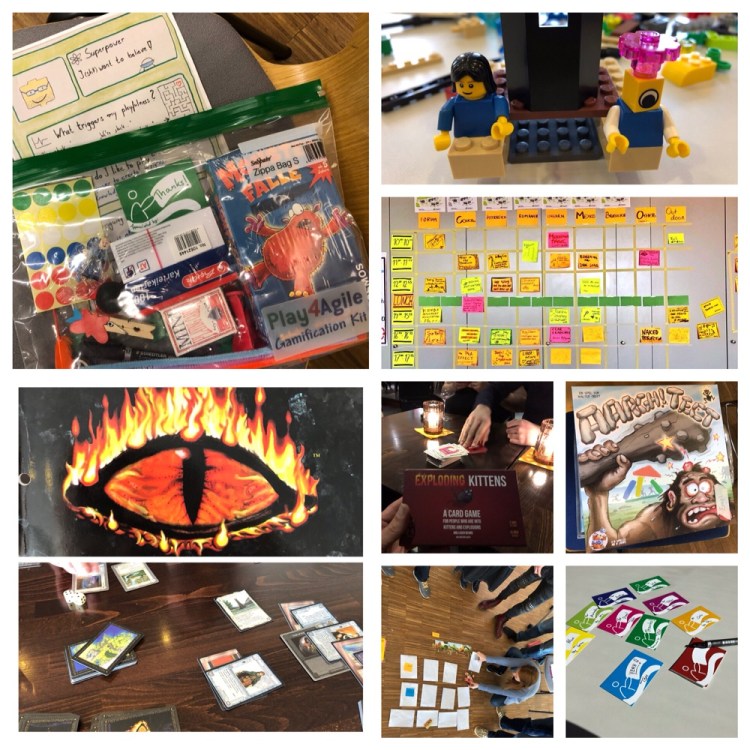
I’ll pick a few of my highlights of #P4A18 that resonates best with this spirit:

In the prevent our mission was to create challenges that could be accomplished in teams of 4-7 people. We got some design principles and deliverables. Afterwards all the teams played all the created challenges outside. It was a playful starter to get in the mood for the days to come. #share

Have you ever wondered how you could make your presentation of i.e. an Open Space more playful and entertaining? Fairies versus the dark lord or selling the slots via a teleshopping channel were two great ideas. Definitely an aspiration for #dare

Getting an introduction to The Lord of the Rings Collectors Card Game – I am not the card game type – was priceless. Together we discovered how many aspects of the game like e.g. roles, power, luck, fight, collaboration, reaching a goal, etc. could easily be observed in the game as well in our working place environments. The game started a nice conversation, although it seems to be too complex to use in a team situation, but maybe it could be of good use, should you be able to have two remote off the net days with your team. #share

Playing the stone age team game was a) hilariously funny and b) it gave hints for discussing aspects of customer/product owner/team relationship.

The Komba Movement Meditation was a little out of my comfort zone – at least I thought that before I tried it. It was very interesting to experience how different kind of playing versions did influence our individual movements and the movements as a group, the wish to win the game and the feeling of safety. #dare

Exploding Kittens and Zombie Dice was my fun in the evenings. As well as longer conversations with some of the participants.

So I hope that now you can imagine how worthwhile this community event is, but I know my description falls short. So you will have to apply yourself!

I will definitely apply again in the years to come. Hope to see your there: Play on!

Ahoy

Tom

Why Ester Ledecka would be an Olympic Champion in Agile as well.

Who is Ester?

Ester Ledecka, the world champion snowboarder from the Czech Republic, delivered one of the biggest upsets in Winter Olympics history on Saturday afternoon, coming out of nowhere to win the women’s super-G. Ledecka, is the first ever athlete to compete in both skiing and snowboarding at the Olympics.

What about agile?

Recently I made my first retrospective with a team from which I had only the following information:

  • they work in the field of R&D
  • they have a PO who brought agile into the project
  • they have a part time ScrumMaster
  • they are in sprint 40
  • the team mood is good
  • the project runs fine
  • their last retrospective was 2 months ago

Ok, the last info made we wonder, but I made the following assumptions before I prepared the retrospective with the ScrumMaster:

  • as researchers they are used to Plan-Do-Check-Act
  • as researchers they are curious
  • as researchers they are able to transfer an idea

Together with the ScrumMaster I prepared a retrospective along the five phases described in Esther Derbys book “Agile Retrospectives”.

What could be observed during the retro was that they weren’t open for exploring their situation. They were fixated around the idea, that they were „clearly“ spending to much time in meetings. What was easier as to get rid of some?

Their suggestion was either skip the dailies or skip the review as they worked on an Action Template. At first they were not even willing to find a metric, so that they could „proof“ that they achieved a better status for the team after that change.

The PO looked like a beaten dog. I felt really sorry for him at that moment.

How could it have come to that?

Besides some other problems inside the organisation that were later revealed to me, my hypothesis is, that this team has not developed an agile mindset so far.

Three stages to agile maturity:

Kata

In the beginning you have to practice the same things over and over to get them right.

Transform your new habit into a deep understanding

After implementing the Katas into their DNA, a team gains a deeper understanding through their experience.

Be comfy with what you do and find your own way

With an deeper understanding a team can develop from there a unique way of doing things.

Why Ester would be an Olympic Champion in Agile as well?

Ester Ledecka is for sure a big talent. Usually this is not enough for championships. Successful athletes like her spend hours, month, years to prepare.

You lost track on that icy ground beneath the left turn? Try it again, and again, and again – until you don’t have to think about it, but just do. She has for sure a deep understanding about her sports. This is the point where the feeling of flow sets in – or to finish with her words:

“I was probably the only snowboarder on site. All the other girls didn’t risk a lot. There must be a lot of pressure on them. I was just trying to do my best run.”

#belikeester #flowlikewater

What do you think?

Agile 101

This week I had the chance to facilitate an Agile 101 course. For me this is always the chance to reflect on what I think starters should know – at best before starting an agile initiative, deciding on an agile framework to use or even worse after having implemented an electronic tracking system first. Of course – like in so many other cases – decisions had been made. Still I was thankful that this group wanted to go back to basics. They gave me 3 hours of their time.

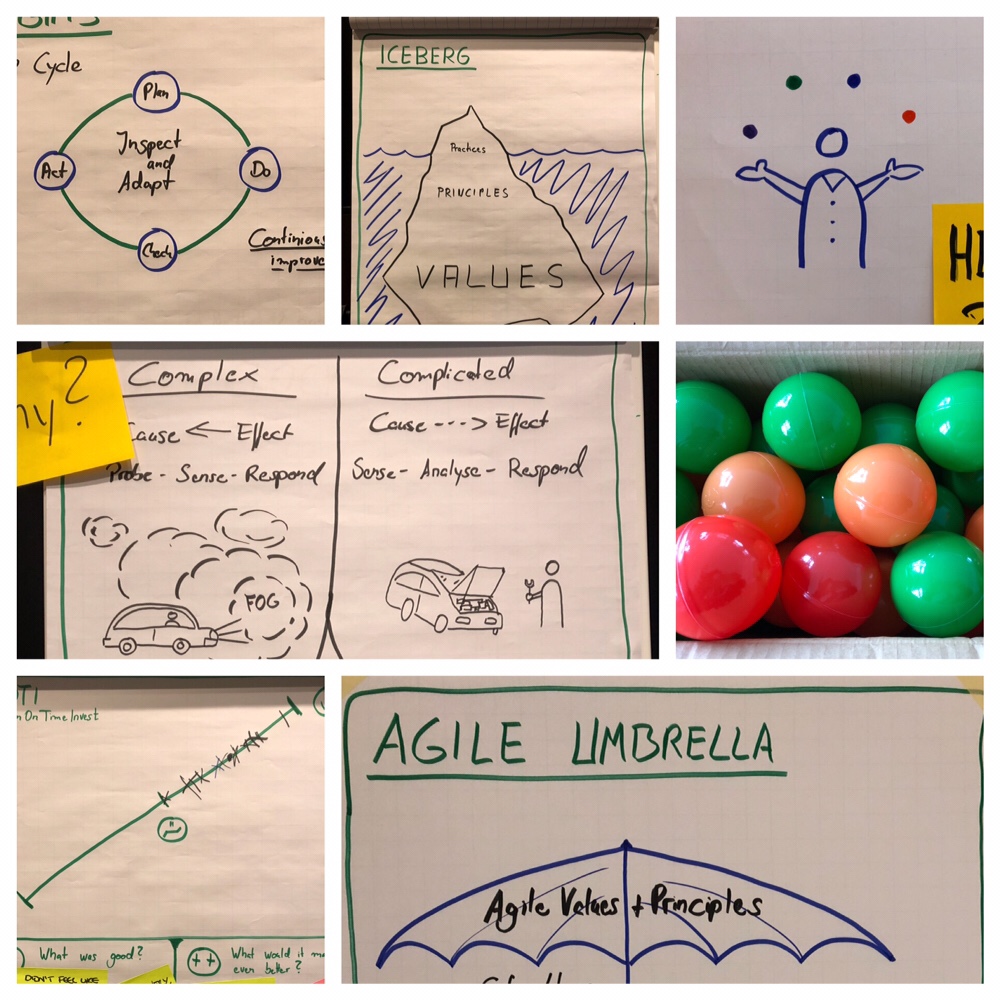
Giving the participants the possibility to experience what we want to talk about, was one of my main goals. For this I played with them the Magic Ball Game without using any hint to Scrum. This fosters usually insights coming from the participants that I can come back to over the whole workshop – as well this time. After debriefing the game I deepened the picture with the Deming Cycle: Plan-Do-Check-Act. For me this is the magic formula for finding your own path. The question why they should bother with all of this I talked about my car issues of last week visualised with the Cynefin Framework. Again combined with the insights of the Magic Ball Game they played before.

Another emphasis lay after a short break on the Agile Manifesto. We read it together + the principles. To spark a discussion they got the task to build an Agile Clock. In my understanding the importance of these 4 values and 12 principles can’t be overstated. I have seen so many projects stuck by just doing – sometimes only parts – of the practices. For me this is like doing science without understanding the theory.

To close the workshop I drew a version of the Agile Umbrella, let the participants add the frameworks they knew under it and ended with a statement by Henrik Kniberg who pointed out, that “using an agile framework doesn’t automatically make you agile” and that “you can be agile without using any (…) framework”. In this moment I could feel their confidence vanish. What was left to hold on to? Of course the Agile Manifesto and the assurance that they are absolutely capable of finding their own way – others did it too!

Last but not least I made a validation of the workshop by letting the participants fill out a ROTI (Return On Time Invested) plus post-it feedback for “What was good? and What would make it even better?”. This way I got valuable feedback and proofed them that I eat my own “dog food”.

What do you think? What are your experiences?

Should you be in or around Nuremberg I would be delighted to meet you – maybe on the next Agile Open Space, or any other agile community.

Thank you for your time!

Tom

2017 – what I have learned this year

2017 is nearly over. Again I learned a lot. Of course not all learning experiences were pleasant. My thanks go out to all the people that I worked with over the over the year.

Some of my personal learnings:

  • the bikablo® visual facilitator course this year improved my skills a lot. I draw better flipcharts now because I am clearer in my visualizations, which helps me a lot in bringing my intention across.
  • we need more plays and games in our work. Serious play has the power to let people, teams, companies explore new territories in a safe to fail way. Hence people can discuss themes they normally would rather not touch. I can only recommend the StrategicPlay® Certified Facilitator Training for LEGO® SERIOUS PLAY® in Hamburg
  • the command and (delusional conception of) control culture is still strong out there – as I could observe several times this year. Especially within some really big companies, but some smaller ones tic unfortunately the same way
  • small companies with single ownership are very likely to tic like their owner tics
  • metrics aren’t any good if they aren’t accepted by the majority of people involved in the process
  • “agile transformations” are tricky at best. All is lost shouldn’t the existing and excepted leaders change first. A good approach is to focus on outcome and impact.
  • the level of pain personally felt increases by the level of feeling helpless in a given situation

In December lady Fortuna had a nice surprise for me in store: I was lucky with my playplication and “won” a place at Play4Agile in February. I’m really looking forward to this.

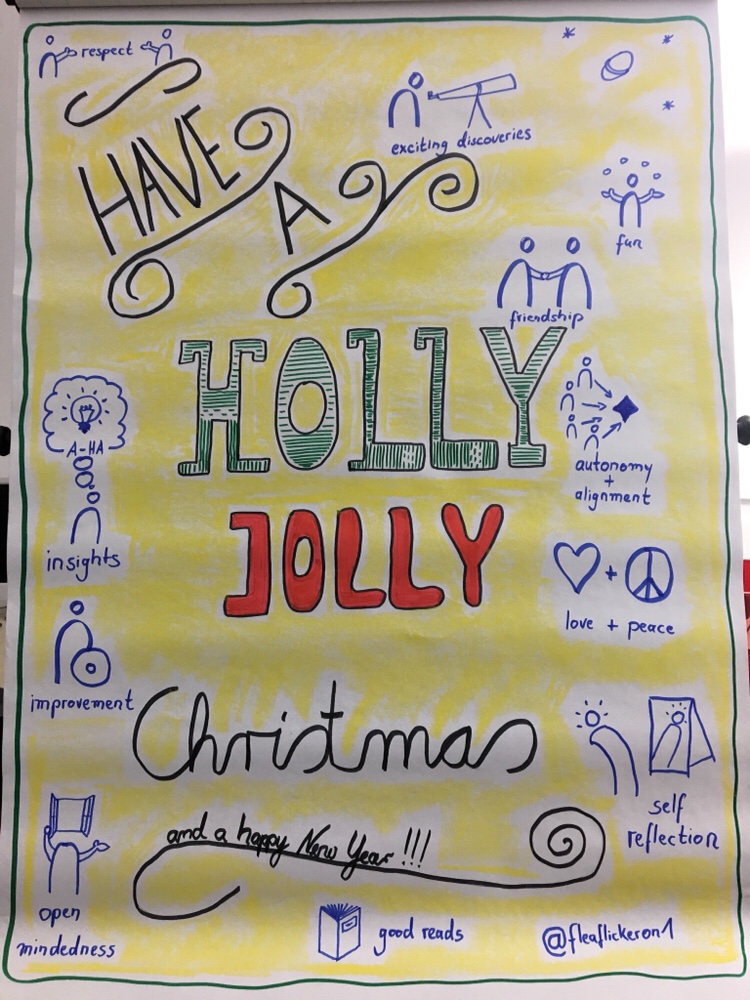
To all of you jolly season greetings. Have a relaxed time between the years and let’s raise a glass to 2018.

To all my teachers, trainers, mentors and friends: I salute you! Thank you so much!

Cheers

Tom

Becoming a bikablo® Visual Facilitator

I love to draw flip charts!

Since I work with agile frameworks, I work with visualizations mostly on flip-charts. I use them in team retrospectives, scrum of scrums, workshops, kick-offs, training’s, etc.

The main advantages for me are:

  • before I can draw a flip-chart I have to really understand what I want to achieve, so that I can reduce the content of the chart to a maximum
  • for my audience it is easier to follow my thoughts and the content that I try to communicate
  • at the end of the session taking pictures of the flip-charts is quick and the documentation of the meeting is read
  • it’s a fantastic way to find some quiet spot – away from all the hassle
  • last but not least it is a sign of appreciation presenting a self drawn flip-chart to a group

Maybe you think: Sounds nice, but I can’t draw!

Well, I would say the same of myself, but fortunately everybody can draw with the bikablo concept:

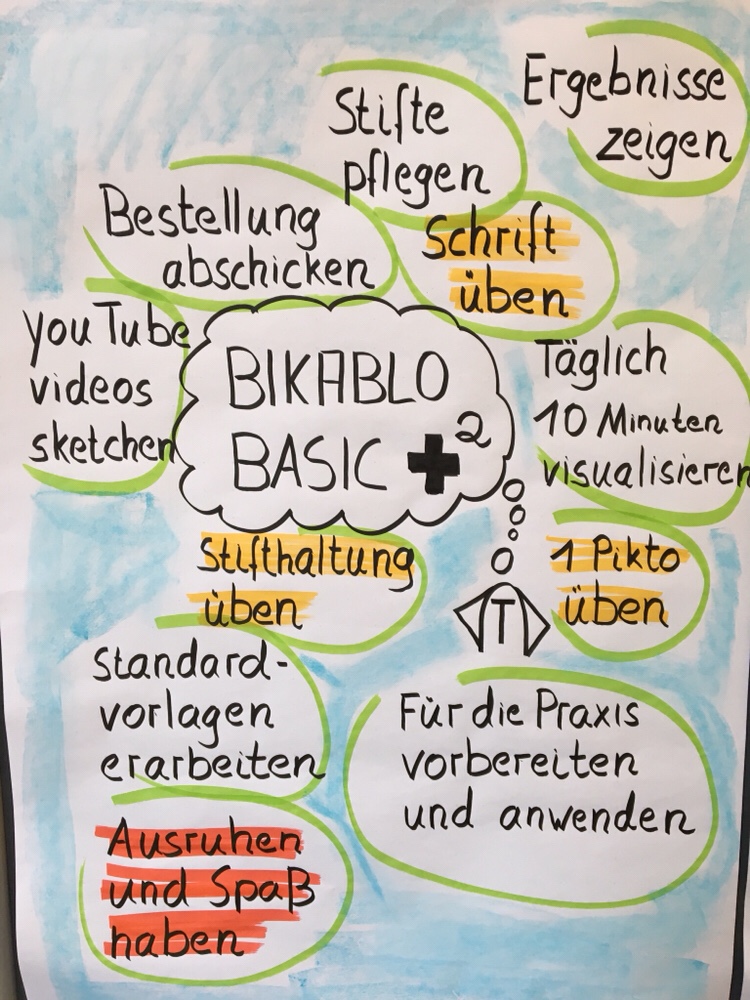
I took the two day course bikablo basic plus and it was worth every penny!

Although I had some practice and experience, plus I had the chance to work with the book bikablo® 2.0 I never had practice in such an intense learning environment. The group in this course was fantastic, because I could take a lot inspiration back home.

Afterwards I bought the book „UZMO“ which is as a good guide for “thinking with the pen” as they call it.

I hope you will have the chance to take part some day!

Enjoy drawing!

Tom

Some impressions of the course

I’m a registered Lego® Serious Play® Facilitator

Start exploring new ideas!

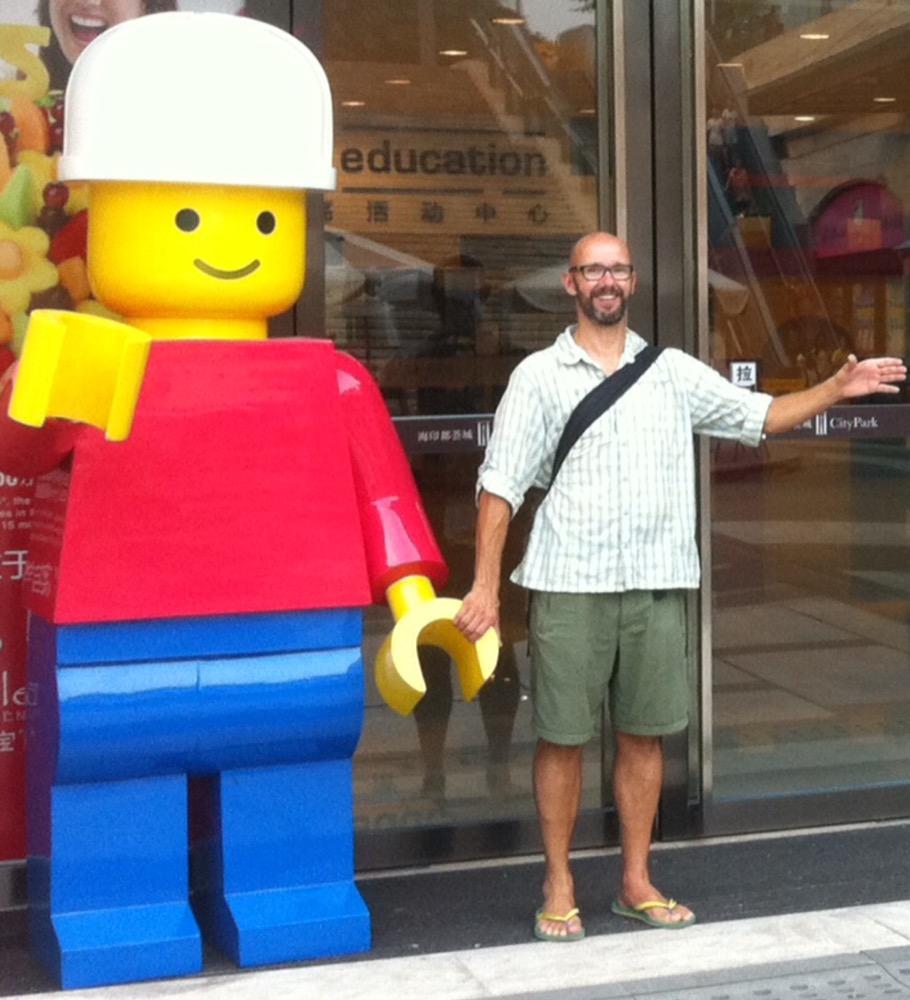
Since this year I’m a registered Lego® Serious Play® Facilitator. In May 2017 I completed a 3 day certified facilitator training with StrategicPlay® in Hamburg. I can only recommend the course and especially Katrin Elster who facilitated it.

What is Lego® Serious Play®?

Basically speaking it’s a playful method to explore either team related questions or strategic questions. The goal is to solve problems with a group in a facilitated process. Building little Lego models visualizes the state of the group discussion, so that everybody has the full picture as it evolves over the day.

Follow the link and you will find a short slideshow of LSP in a nutshell.

Where can it help?

You know the Cenefin sensemaking framework, wright!? As you remember it has four sectors. In most organizations with either a lot of people or/and dealing with totally new inviroments you’re probalbyl in the complex zone. This means, that the relationship between cause and effect can only be perceived in retrospect. You need an emergent practice to probe, sense and respond. That is why you want to try something with a safe to fail mechanism first, before you put your assumption to the test in the real world.

How many participants does such a workshop have?

Ideal is 5 to 8 people.

How long does it take?

The identity workshop might take 2-3 hours. The full blown strategy or team process takes at least one day.

How to start?

I ‚m able to facilitate workshops for identity or full blown strategy or team processes. The first step is to clarify together with you – the client – the questions needed to design a customized workshop. That will take 1-2 hours and is to be charged separately. Should you book a workshop after that, you will get a discount on the workshop.

Some impressions of the training that I attended:

Play 4 Agile

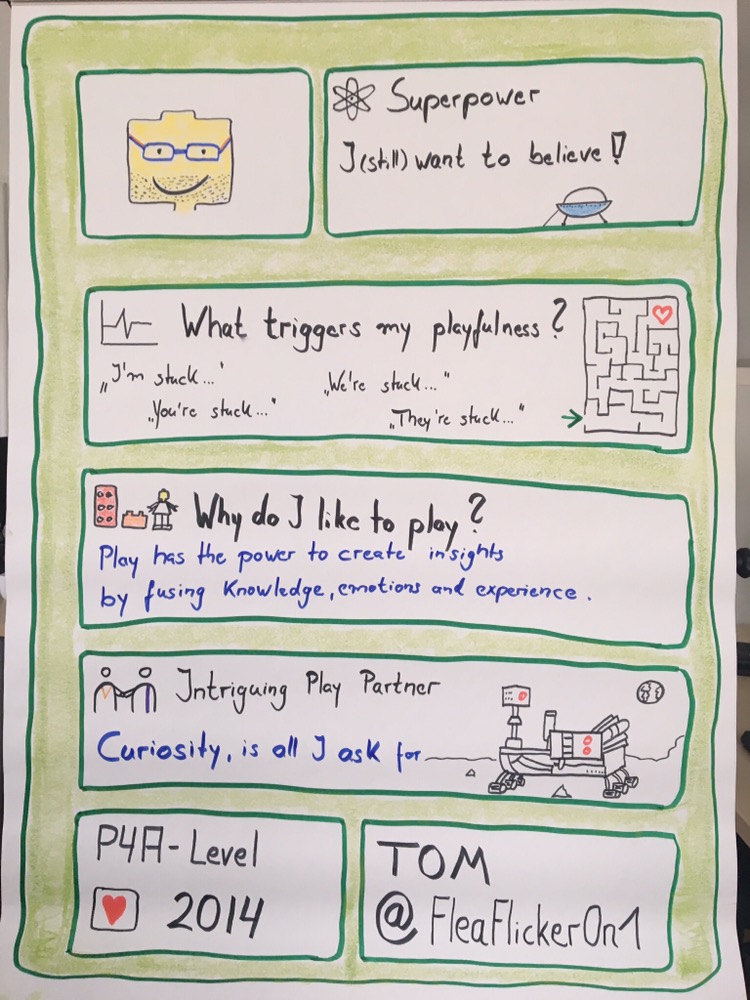
My first contact with the unconference Play4Agile was in 2014. It had one year of experience with agile. I wanted to meet people who could show me how to create plays and games that could open the minds of the people I worked with in my company and for sure open my horizon as well. Although I had participated in the Agile Coach Camp in 2013 and had a friendly + mind-blowing experience, I felt a bit out of my comfort zone going there.

This long weekend that I spend in Rückersbach was again a powerful experience. Working with such a group of dedicated people, with so much passion for what they were doing and on the same time open minded, playful and welcoming.

I left with a backpack full of new ideas, that kept me busy the next months. A side effect of this is, that you experience that you are not alone believing in agile values.

I only can recommend it – which is the reason why I forwarded my #playplication for #p4a18

One of the best things is the ROI. Because it is self organized it costs only about 400 € including accommodation and food. The ideas that you take away in your head are priceless!

On the P4A website they describe best who participates?

“Play4Agile is for playful, creative people who are passionate about change… from all over the world. We welcome those who want to exchange questions, ideas and experiences on using games in teams and organisations!

Play4Agile provides an open playground to inspire each other and to learn how using serious games can help us achieve our goals.

Play4Agile is a gathering of experienced peers from all over the world to create and play games in an inspiring environment.

The conference usually sells out quickly, so mark your calendar with the registration date!”

Hope to meet you there one day! Maybe 2018, because Lady Luck was on my side in the lottery 🙂

Tom

Agile Open Space Nuremberg


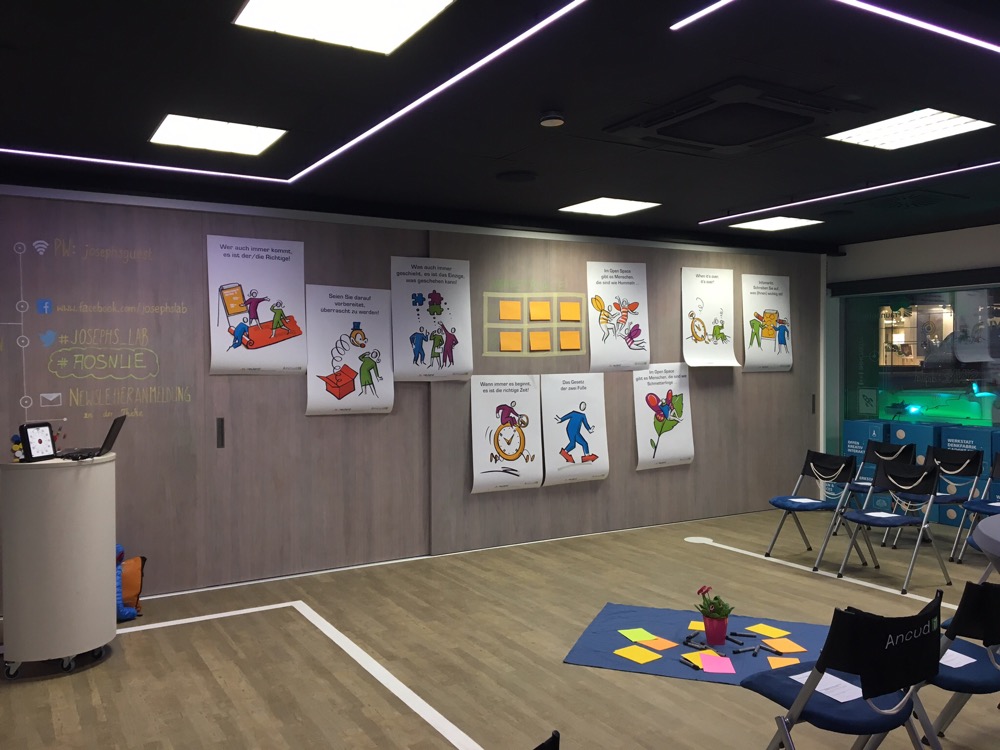
Agile Open Space Nuremberg is the name of a new community event in the Nuremberg Metropole region, that I have the privilege to facilitate with the support of Ancud IT – the company I work for at the moment.

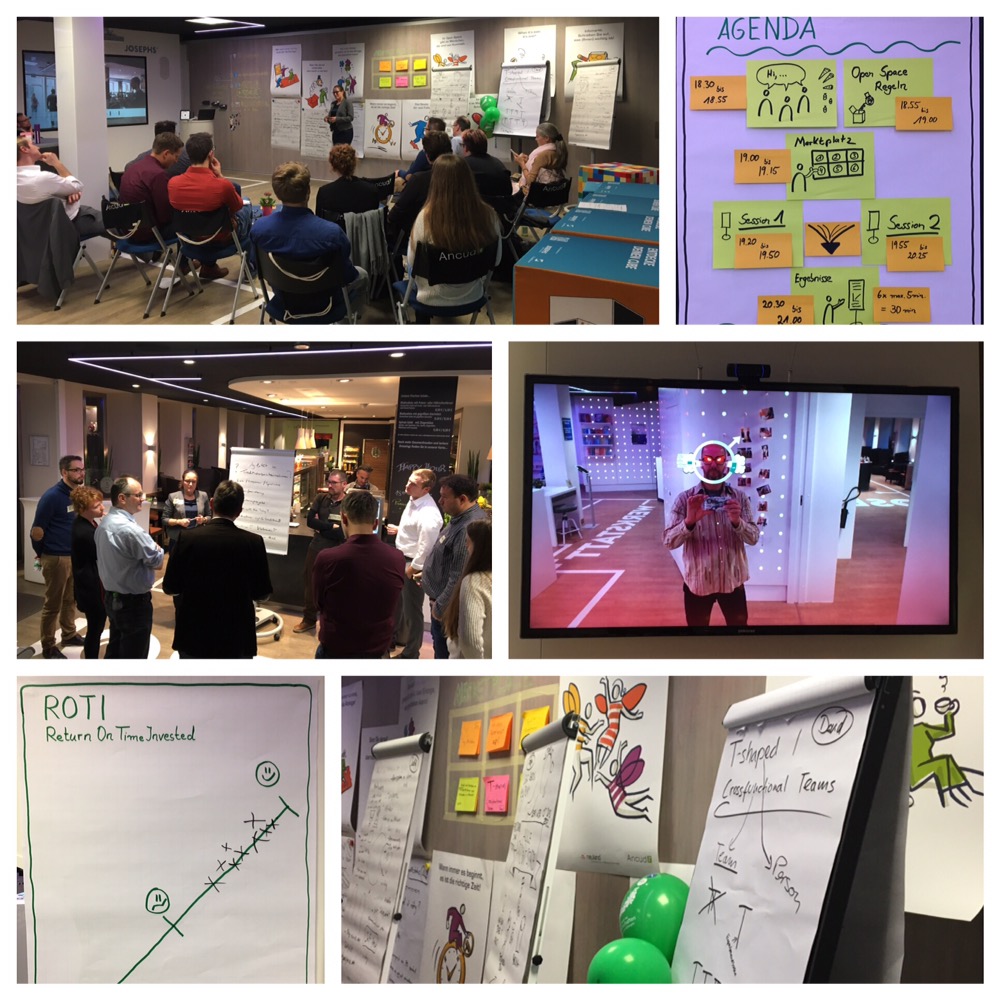
We started this during the Nuremberg Web Week 2017. This platform gave us the chance to reach a wide range of interested people. Around 50 people took part and the format received a lot of positive feedback.

The picture above is from the 24th of October – the 3rd Agile Open Space this year. What I was especially proud of was, that we had a really diverse group of participants.

Are you interested in participating have a look at the Agile Open Space Event at Xing. There you can find the latest news.

Hope to see you soon!

Tom